Zoom Producer Logistics: 7 Proven Critical Meeting Secrets
You stare at your calendar and see a solid wall of back-to-back meetings that result in exactly zero decisions made.
Let me be direct. If your team is spending ten hours a week in Zoom calls but still asking you what to do next, you have a massive operational leak. Most small business owners think more communication equals more clarity. The reality is that more communication without a structure like Zoom Producer Logistics actually creates more confusion and less profit. I have seen this pattern dozens of times in businesses scaling from $500K to $2M in revenue. You do not need more meetings. You need a rhythm that works without you being the only person talking. Here is how you take back your time and install a cadence that actually drives growth.
The Reality of Meeting Bloat in Small Business
The pattern is always the same. When you were a team of three, you just shouted across the room or sent a quick Slack message. As you grow to ten or fifteen people, those quick chats turn into hour-long “syncs” that go nowhere. This is where Zoom Producer Logistics becomes your most valuable asset. Without a specific system for how meetings are run, they become social hours or venting sessions. You are paying for those hours. If you have five people in a one-hour meeting, and their average cost is $50 an hour, that meeting just cost you $250. If nothing was decided, you just threw that money in the trash.
Zoom Producer Logistics is about the backend management of how information flows through your digital office. It is the difference between a chaotic group chat and a professional operational rhythm. When you lack Zoom Producer Logistics, your top performers get frustrated because they are stuck in “update” meetings instead of doing the work they were hired for. The honest answer is that most meetings should have been an email or an SOP. By implementing Zoom Producer Logistics, you ensure that every minute spent on camera has a direct return on investment.

Why Profit Shrinks as Meetings Grow
I have observed that as revenue grows, operational efficiency often drops because the founder becomes a bottleneck in every conversation. You feel like you have to be in every meeting to make sure things are done right. This is a trap. Zoom Producer Logistics allows you to step out of the day-to-day noise. If you are still the one setting the agenda and managing the recording and the follow-up tasks, you are acting as a $25 per hour admin instead of a CEO.
The logic is simple. Every hour you spend in a poorly managed meeting is an hour you are not spent on strategy or high-level sales. Zoom Producer Logistics fixes this by standardizing the “who, what, and when” of your internal communication. We call this part of The Clarity Transformation because it removes the fog that settles over a growing team. When you apply Zoom Producer Logistics, you are telling your team that their time is valuable and that the business expects a specific output from every gathering.
Step 1: Define Your Core Meeting Cadence
You do not need a meeting for everything. You need four specific types of touchpoints. The first is the Daily Standup. This is a 15-minute max meeting where the team shares what they did yesterday, what they are doing today, and where they are stuck. Zoom Producer Logistics for a standup means no one is allowed to “solve” problems during the call. If a problem arises, they schedule a separate time. This keeps the rhythm fast and the energy high.
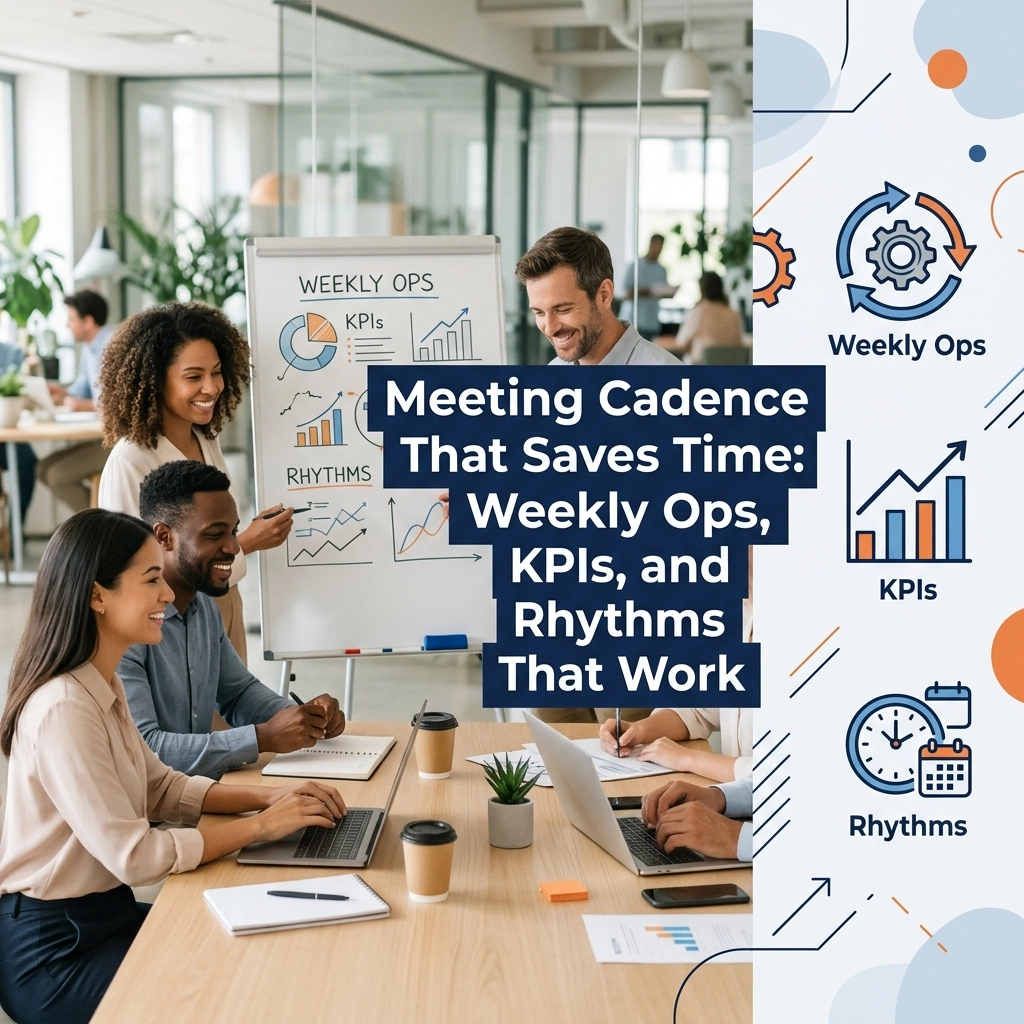
The second is the Weekly Ops Meeting. This is where Zoom Producer Logistics really shines. This is a 60-minute deep dive into the numbers and the big projects. You need a clear agenda that everyone sees 24 hours in advance. Zoom Producer Logistics dictates that if it is not on the agenda, it does not get discussed. This prevents the meeting from spiraling into a series of “quick questions” that eat up the clock.
The third is the Monthly Strategy Review. This is where you look at the big picture. Zoom Producer Logistics here involves preparing data decks and KPI reports so you are looking at facts, not feelings. Finally, the Quarterly Planning session is where you set the next 90 days of goals. By using Zoom Producer Logistics across all four levels, you create a predictable environment where the team knows exactly when they can get answers.
Step 2: Establish KPI and Decision Rhythms
A meeting without data is just a conversation. To save time, every meeting must be anchored by Key Performance Indicators (KPIs). Zoom Producer Logistics includes the habit of having your dashboard open and ready before the first person joins the call. If the numbers are on track, you do not need to talk about them. You only talk about the “red” numbers. This is a core part of the Clarity Operational Partnership we build with our clients. We move you away from “talking about work” to “managing the outcomes.”
When you use Zoom Producer Logistics to manage by exception, your meetings get shorter. You spend your time solving the problems that are actually hurting your bank account. The pattern of success involves looking at the same 5 to 10 metrics every single week. Zoom Producer Logistics ensures those metrics are updated and accurate so you are not arguing about whose spreadsheet is correct.

Step 3: Master the Zoom Producer Logistics Role
In every meeting, someone must play the role of the “Producer.” This is not necessarily you. In fact, it should not be you. Zoom Producer Logistics involves having one person dedicated to managing the technology, the timekeeping, and the note-taking. This person ensures the Zoom link is correct, the recording starts on time, and the action items are tagged in your project management tool in real-time.
When you hire a Fractional COO through a Clarity Operational Partnership, we often step in to audit these Zoom Producer Logistics. We look for where the friction is. Are people showing up late? Is the audio bad? Are the notes getting lost in a Slack channel? These small annoyances add up to massive friction over a year. Improving your Zoom Producer Logistics is one of the fastest ways to improve company morale because it shows you respect the team’s mental bandwidth.
How The Clarity Transformation Fixes Your Calendar
We don’t just give you a template and walk away. The Clarity Transformation is a hands-on overhaul of how your business breathes. We look at your current schedule and take a chainsaw to it. If a meeting doesn’t have a clear owner or a clear goal, we kill it. Then, we install Zoom Producer Logistics to make sure the meetings that remain are world-class.
What you won’t have is the feeling of dread when you look at your Monday morning. Instead, you will have a lean, mean operating machine. Through the Clarity Operational Partnership, we help you delegate the management of these rhythms to your team. You become the visionary who drops in to provide guidance, not the manager who has to pull every tooth to get an update. Zoom Producer Logistics provides the structure so you can provide the leadership.
Common Mistakes in Virtual Logistics
The most common mistake is thinking you can “wing it” because you are a small team. You might think that formalizing Zoom Producer Logistics will make you feel corporate or stiff. The truth is that the lack of structure is what makes work feel like a grind. Without Zoom Producer Logistics, your team is constantly guessing what you want. They are waiting for meetings to get permission to move forward.
Another mistake is having too many people in the room. If a person does not need to provide data or make a decision, they do not need to be there. Use Zoom Producer Logistics to record the meeting and send them the highlights instead. This saves you thousands of dollars in hidden labor costs. When we implement The Clarity Transformation, we often find that 30% of meeting attendees are completely unnecessary for the actual goals of the call.

Phase 1: The 14-Day Meeting Audit
Start by tracking every minute your team spends on calls for one week. Use the lens of Zoom Producer Logistics to evaluate them. Was there an agenda? Did it start on time? Were there clear action items? Most owners find that their Zoom Producer Logistics are nonexistent. This is your baseline. You cannot fix what you do not measure.
In the second week, start implementing the “No Agenda, No Meeting” rule. This is a basic pillar of Zoom Producer Logistics. If the person requesting the meeting cannot write down what they want to achieve, they aren’t ready to talk. You will see your calendar start to clear up almost immediately. This is the first step toward a true Clarity Operational Partnership where everyone is accountable for the time they consume.
The Goal: A Self-Sustaining Operating Rhythm
By the end of 90 days, your business should run on a pulse. You should be able to look at a single dashboard, attend two or three key meetings, and know exactly how the business is performing. This is the power of Zoom Producer Logistics. It creates a “single source of truth” for your operations. You are no longer guessing if the project is on track because the Zoom Producer Logistics ensure the updates are captured and visualized every single week.
The reality is that your business will only grow to the level of your systems. If your communication system is a mess, your growth will be a mess. Zoom Producer Logistics is the glue that holds your scaling efforts together. Whether you are managing a local service team or a remote group of specialists, the rules of Zoom Producer Logistics remain the same: Be fast, be data-driven, and be decisive.
FAQs About Operational Meetings
How many meetings are too many?
If you or your leadership team are spending more than 15% of your week in meetings, you likely have a problem with your Zoom Producer Logistics. Most small businesses can run effectively on 3 to 5 hours of structured meetings per week if the documentation is solid.
Should I record every meeting?
Yes. Part of professional Zoom Producer Logistics is creating a library of decisions. This allows people who missed the meeting to catch up at 2x speed and provides a reference if there is a dispute later about what was decided.
What is the best length for a weekly ops meeting?
For most small businesses, 60 minutes is the sweet spot. If you have great Zoom Producer Logistics, you can often get it done in 45 minutes. Anything over 90 minutes results in a massive drop in focus and productivity.
Who should be the “Zoom Producer”?
Usually, an Operations Manager or a lead administrator handles Zoom Producer Logistics. They should be someone organized who isn’t the primary speaker, so they can focus on the technical and administrative flow of the call.
How do I get my team to buy into this?
Explain the “Why.” Tell them that better Zoom Producer Logistics means fewer interruptions and more time for them to actually do their jobs. Most employees hate bad meetings as much as you do.
Take Back Your Calendar Today
You have two choices. You can keep letting your calendar be a source of stress, or you can install a professional rhythm. Zoom Producer Logistics is not just about software; it is about a commitment to operational excellence. If you are ready to stop being the bottleneck and start being the owner, it is time for a change.
We specialize in helping founders transition from “doing” to “leading” through The Clarity Transformation. We don’t just talk about systems; we build them with you. Through a Clarity Operational Partnership, we can audit your current rhythms and install the Zoom Producer Logistics you need to scale without losing your mind.
Let’s fix your operations together.
Related Blogs
- The $10K Monthly Cost of Being Your Own Bottleneck
- 12 Fractional COO Red Flags
- The First 30 Days with a Fractional COO
- Communication Training Hacks
- Weekly Ops Meetings That Actually Drive Decisions
- Meeting Cadence Systems for Growing Teams
- How to Run a 15-Minute Daily Standup That Works
- KPI Dashboards for Small Business Leadership
- Why Most Meetings Should Have Been an Email
- Reducing Meeting Bloat: 7 Proven Fixes
- Time Management for Founders With Packed Calendars
- How to Structure Leadership Meetings for Results
- The True Cost of Unproductive Meetings
- Agenda-Driven Meetings: 5 Rules for Success
- How to Eliminate Wasted Time in Team Calls
- Project Management Meetings vs Status Updates
- Communication Systems for Remote Teams
- How to Build a Weekly Business Rhythm
- Decision-Making Frameworks for Team Meetings
- Meeting Roles and Responsibilities: Who Does What
- How to Track Action Items Without Losing Them
- Zoom Meeting Best Practices for Business Owners
- Running Effective Virtual Meetings for Teams
- Why Your Team Leaves Meetings Confused
- Data-Driven Meetings: How to Use KPIs Correctly
- Leadership Communication Systems That Scale
- How to Cut Your Meeting Time in Half
- When to Cancel a Meeting Instead of Holding It
- Team Alignment Without Constant Meetings
- Building a Single Source of Truth for Operations
- Internal Communication Systems That Replace Meetings
- How to Run a Productive Weekly Scorecard Meeting
- Calendar Management for CEOs and Founders
- Why Too Many Meetings Kill Productivity
- Remote Team Coordination Without Chaos
- How to Train a Team to Run Meetings Without You
- Meeting Follow-Up Systems That Ensure Execution
- Eliminating “Update Meetings” From Your Calendar
- Time Blocking Strategies for Business Leaders
- How to Create Accountability in Team Meetings
- The Role of an Operations Manager in Meetings
- How to Improve Team Focus During Virtual Calls
- Business Communication Mistakes That Waste Time
- From Chaos to Clarity: Fixing Your Meeting Systems