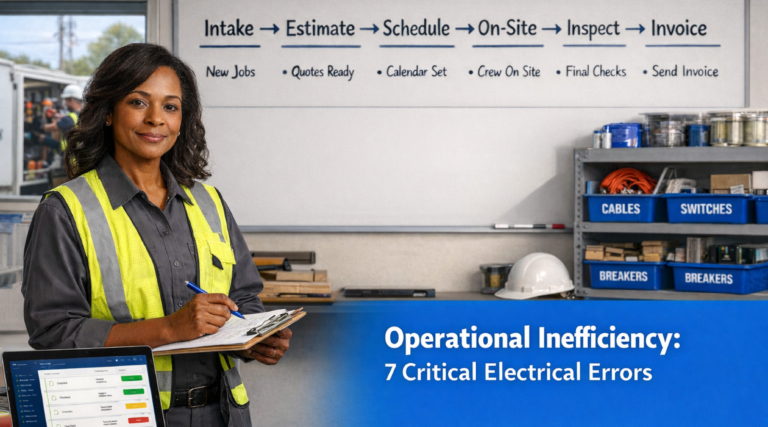
Inconsistent Client Experience: 7 Deadly Reasons Plumbing Clients Complain
You just wrapped up a perfect service call. The client raved about your technician, left a five-star review, and said they’d recommend you to everyone they know. Two weeks later, a different client calls furious because your team showed up late, didn’t communicate, and left their bathroom a mess. Same company. Completely inconsistent client experience.
This isn’t a technician problem. It’s not a hiring problem. It’s an operations problem, and it’s costing you more money than you realize.
When clients get an inconsistent experience from your plumbing company, they don’t blame the individual technician. They blame your brand. They tell their neighbors. They leave reviews. They choose your competitor next time. Research shows that 76% of customers will stop doing business with a company after just one bad experience, even if they’ve had positive experiences before.
The truth is, most plumbing companies don’t have a client experience problem. They have a systems problem that creates an inconsistent client experience. Your best technician delivers amazing service because he intuitively knows what to do. Your newest technician frustrates clients because nobody showed him your standards. That gap? That’s where your reputation goes to die.
Let’s fix it.
Why Inconsistent Client Experience Happens in Plumbing Companies
The inconsistent client experience your clients encounter isn’t random. It follows predictable patterns that emerge when plumbing companies scale without building operational infrastructure. You started as a one-person operation where you controlled every interaction. You knew exactly what clients expected because you were there for every call, every job, every follow-up.
Then you hired your second technician. Then your third. Then you added an office person to handle scheduling. Suddenly, the inconsistent client experience began because you were recreating your service quality through osmosis rather than systems.
Here’s what actually causes the inconsistent client experience that’s damaging your plumbing business right now.
1. You Don’t Have Documented Service Standards
Most plumbing companies run on tribal knowledge. Your experienced technicians know how you want things done because they’ve been with you for years. They learned by watching you, asking questions, and making mistakes. That’s how you trained them.
This creates an inconsistent client experience because new technicians don’t have access to that same learning curve. They make different judgment calls. They communicate differently. They handle complaints differently. Clients notice.
Your service standards live in your head, not in a document that every team member can access. When clients call, they’re rolling the dice on which technician shows up and what that technician thinks “good service” means. That’s the definition of inconsistent client experience.
The gap between your best technician and your weakest technician represents the inconsistent client experience spectrum your clients face. Without documented standards, that gap widens every time you hire someone new.
2. Your Communication Process Changes Based on Who’s Working
Monday morning, Sarah answers the phones. She confirms appointments, asks about access instructions, and sends calendar reminders. Tuesday afternoon, Mike covers the phones. He books the job but forgets the reminder. Wednesday, you’re answering calls between job sites, and you skip half the confirmation process entirely.
This communication inconsistency creates an inconsistent client experience before your technician even arrives. Some clients get three touchpoints and clear expectations. Others get a verbal confirmation and nothing else. When the technician shows up and the client isn’t prepared, everyone blames everyone else.
The inconsistent experience extends to how technicians communicate during jobs. One technician walks clients through every step and sends photo updates. Another works in silence and hands over a bill at the end. Same company, completely different experience, totally inconsistent client experience.
Your clients don’t know which version of your company they’re getting until it’s too late to choose differently. That uncertainty erodes trust before the work even begins.
3. Your Pricing Presentation Varies by Technician
Here’s where inconsistent client experience costs you real money. You have a price list, but how that price gets presented depends entirely on which technician is on the job.
Your confident technician presents the quote clearly, explains the value, handles objections smoothly, and closes at your full rate. Your shy technician mumbles through the estimate, apologizes for the price, offers discounts without being asked, and closes at a lower margin.
This pricing inconsistency creates an inconsistent client experience that trains customers to shop around or ask for discounts. Clients talk to each other. When one neighbor paid $300 less for the same job because they got a different technician, your pricing integrity collapses.
The inconsistent client experience in pricing also affects how clients perceive value. When presentation quality varies, clients assume the work quality varies too. They become price-focused instead of value-focused because they don’t trust that they’re getting the same service their neighbor got.
4. Problem Resolution Depends on Who Handles the Complaint
Every plumbing company gets complaints. The inconsistent client experience shows up in how those complaints get resolved. When you handle a complaint, you might offer a discount, a redo, or a sincere apology with a small concession. Your office manager might argue with the client. Your senior technician might fix it for free. Your junior technician might not have authority to do anything.
This resolution inconsistency creates an inconsistent client experience that punishes reasonable clients and rewards aggressive ones. The client who calls three times and threatens a bad review gets better treatment than the client who politely mentions a concern once.
Without a documented problem resolution process, your team makes reactive decisions that create the inconsistent client experience pattern clients learn to exploit or avoid entirely by choosing competitors.
5. Follow-Up Happens Sometimes, Not Every Time
Your best clients get follow-up calls, maintenance reminders, and thank-you notes. Your average clients get nothing unless something goes wrong. This follow-up gap creates an inconsistent client experience that affects lifetime value.
The inconsistent experience in follow-up happens because you don’t have a system. You follow up when you remember, when you have time, or when the client seems important enough. Everyone else falls through the cracks.
Clients notice when their neighbor gets a one-year maintenance reminder and they don’t. They notice when some reviews mention exceptional follow-up care and their experience ended when your truck left their driveway. The inconsistent client experience in post-service care damages retention more than most plumbing companies realize.
6. Your Scheduling Process Creates Expectation Mismatches
The inconsistent experience often starts with scheduling. One client gets a firm appointment time. Another gets a four-hour window. A third gets “sometime Tuesday” and a call when the technician is on the way.
This scheduling inconsistency creates an inconsistent client experience in time management. Clients who get narrow windows plan their day around your arrival. Clients who get wide windows waste half a day waiting. When your actual arrival time doesn’t match the expectation you set, clients get frustrated regardless of your work quality.
The inconsistent experience extends to how schedule changes get communicated. Some clients get a text an hour before about delays. Others get a call from a panicked office person. Some get nothing until the technician arrives three hours late.
7. Training Quality Varies Dramatically Between Technicians
Your top technician got months of mentoring. Your newest hire got a week of shadowing and a “figure it out” approach. This training gap creates the inconsistent client experience that shows up in every client interaction.
The inconsistent client experience from training gaps manifests in technical competence, communication skills, problem-solving approaches, and professional presentation. Clients can’t tell which technician got proper training until that technician is already in their home.
Without standardized training protocols, every new hire creates a new version of inconsistent client experience for your clients. The learning curve plays out on paying customers instead of in controlled training environments.
The Real Cost of Inconsistent Client Experience
The inconsistent client experience costs more than bad reviews. It costs you predictable revenue, premium pricing power, and operational scalability.
When clients experience inconsistent client experience, they become price shoppers. They can’t trust that your higher price means consistently better service, so they call three companies and choose the cheapest quote. Your pricing premium evaporates because your inconsistent client experience makes value comparison impossible.
The inconsistent client experience also kills referrals. Clients who have great experiences still hesitate to refer you because they don’t trust that their referral will get the same experience they got. They’ve seen the inconsistent client experience firsthand when they talked to neighbors who used you.
Operationally, inconsistent experience makes scaling impossible. You can’t confidently hire technician number six when technician number five is still creating inconsistent client experience issues. You can’t expand to a second service area when you haven’t systematized the first one. Growth stalls because the inconsistent client experience grows proportionally with your team size.
How to Fix Inconsistent Client Experience Systematically
Fixing inconsistent experience requires operational infrastructure, not better hiring or more training hours. You need systems that make consistent delivery easier than inconsistent delivery.
Document Your Service Standards Completely
Start by writing down exactly what “good service” means at your company. Document every client touchpoint from first call to final follow-up. Specify communication standards, appearance standards, work quality standards, and problem resolution standards.
Your documented standards should eliminate the inconsistent client experience by removing interpretation. Instead of “communicate clearly with clients,” your standard should specify: “Explain the problem in plain language, present options with pricing for each option, ask if the client has questions, and confirm their choice before starting work.”
This documentation eliminates inconsistent experience by creating a reference point. When technicians face situations they haven’t encountered, they consult the standards instead of guessing. When you identify inconsistent client experience issues, you update the documentation instead of hoping better communication fixes it.
Create Communication Templates for Every Touchpoint
The inconsistent client experience in communication ends when you template every message. Create scripts for booking calls, confirmation messages, arrival notifications, completion summaries, and follow-up outreach.
Templates don’t make communication robotic. They ensure every client gets the same information regardless of who’s communicating. Your templates should include what information to gather, what information to provide, and what expectations to set.
The inconsistent client experience in communication often comes from team members forgetting steps. Templates turn memory into checklists. Nobody forgets to ask about parking access when the booking template prompts them to ask.
Standardize Your Pricing Presentation Process
Eliminate inconsistent client experience in pricing by creating a presentation framework every technician follows. Document how to present estimates, how to explain value, how to handle price objections, and when discounting is appropriate.
Your pricing presentation system should include diagnostic protocols that ensure every technician gathers the same information before quoting. The inconsistent experience in pricing often starts with inconsistent diagnosis. When technicians assess problems differently, they quote differently, creating inconsistent client experience in both price and scope.
Train every technician on your pricing presentation until they can deliver it consistently. Record presentation practice sessions. The inconsistent experience in pricing costs too much to leave to individual personality and confidence levels.
Build a Problem Resolution Matrix
The inconsistent client experience in complaint handling ends when you create a decision matrix. Document common complaint categories and the appropriate resolution for each category.
Your matrix should specify what problems get immediate free service calls, what problems get partial refunds, what problems get apologies and explanations, and what problems require management escalation. The inconsistent client experience happens when technicians and office staff make reactive decisions without framework.
Empower your team to resolve issues within the matrix parameters without needing approval. The inconsistent experience gets worse when resolution speed varies based on who’s available to make decisions.
Implement Automated Follow-Up Systems
Technology eliminates the inconsistent client experience in follow-up. Set up automated email or text sequences that trigger after job completion, after payment receipt, and at maintenance intervals.
Your automated systems should prompt for reviews, check satisfaction, offer maintenance agreements, and provide seasonal service reminders. The inconsistent experience in follow-up happens because manual processes depend on memory and availability.
Automation doesn’t replace personal touch. It ensures the personal touch happens consistently for every client instead of only for the clients someone remembers to contact.
Systematize Your Scheduling and Communication
The inconsistent client experience in scheduling ends when you implement scheduling software that controls expectation setting. Your system should enforce appointment window standards, automate confirmation messages, send arrival notifications, and flag schedule changes that need client communication.
Stop allowing team members to set different types of expectations. The inconsistent client experience in time management comes from inconsistent promises. Your scheduling system should make it impossible to book appointments without following your standard communication protocol.
Create Competency-Based Training Tracks
New technicians should complete documented training modules that cover technical skills, communication skills, and company standards. The inconsistent client experience from training gaps ends when every technician completes the same competency milestones before working independently.
Your training program should include skills assessments, communication scenarios, and standard job simulations. Technicians should demonstrate competency in controlled environments before creating inconsistent client experience risks with real clients.
Document exactly what “ready for solo jobs” means. The inconsistent client experience happens when readiness standards vary based on hiring urgency rather than actual competency.
Measuring Your Client Experience Consistency
You can’t improve inconsistent client experience without measuring it. Implement systems that track experience consistency across your team.
Send satisfaction surveys after every job. Track response rates and scores by technician. The inconsistent client experience shows up clearly in individual technician satisfaction scores. If your scores vary by more than 10% between technicians, you have systems problems, not people problems.
Monitor review content, not just ratings. The inconsistent client experience appears in what clients mention. When some reviews praise communication and others complain about it, when some mention cleanliness and others mention mess, you’re seeing inconsistent client experience patterns.
Track your callbacks and complaint patterns. The inconsistent client experience drives specific types of callbacks. If certain technicians generate more communication complaints while others generate more technical complaints, your training and systems need adjustment.
When to Get Help With Inconsistent Client Experience
Most plumbing companies can’t fix inconsistent experience alone. You’re too close to your operations to see the gaps clearly. You don’t have time to document everything while also running jobs and managing people.
The inconsistent client experience continues because documentation projects never get prioritized above immediate revenue work. You know you need systems, but you don’t have capacity to build them.
This is exactly when fractional operational help makes sense. An operations specialist can document your standards, build your systems, train your team, and implement tracking mechanisms in 90 days. The inconsistent experience that’s been plaguing your company for years gets systematically eliminated while you focus on the work that generates revenue.
The inconsistent experience costs you more in lost lifetime value and reputation damage than hiring operational help. When you calculate the actual cost of client churn, discounting, and reputation management, the investment in fixing inconsistent experience pays for itself in the first quarter.
Your Next Steps to Eliminate Inconsistent Client Experience
Start by auditing your current client experience. Call your own company as a mystery shopper. Have someone else do the same thing the next day. Note every difference. That’s your inconsistent experience mapped.
Survey your last 50 clients about their experience. Ask specific questions about communication timing, technician professionalism, pricing clarity, and follow-up. The inconsistent client experience will show up in the variation of responses.
Document one process completely this week. Pick your booking process or your arrival protocol. Write down every step exactly as it should happen every single time. That’s your first weapon against inconsistent experience.
The inconsistent client experience destroying your plumbing company’s reputation is fixable. It requires operational discipline, documentation commitment, and systems thinking. It’s not about hiring better people. It’s about building better infrastructure that makes consistency automatic.
Your clients deserve the same excellent experience every time. Your team deserves clear standards that make their jobs easier. Your business deserves the premium pricing and client loyalty that comes from eliminating inconsistent client experience.
The question isn’t whether inconsistent client experience is hurting your business. It is. The question is whether you’ll invest the time and focus to fix it systematically, or keep hoping better communication and harder work will somehow create different results.
Frequently Asked Questions
What causes inconsistent client experience in plumbing companies?
Inconsistent client experience happens when companies scale without documenting standards, creating templates, or systematizing communication. Different team members make different decisions without operational frameworks.
How long does it take to fix inconsistent client experience?
Most plumbing companies can eliminate major inconsistent client experience issues within 90 days by documenting standards, implementing templates, and training teams on consistent protocols. Full optimization takes 6-12 months.
Can small plumbing companies have inconsistent client experience problems?
Yes, inconsistent experience affects companies of all sizes. Even two-person teams create inconsistent client experience when both technicians handle situations differently without documented standards.
How much does inconsistent client experience cost plumbing companies?
Inconsistent experience typically costs 30-40% of potential lifetime client value through reduced referrals, lower retention, price shopping behavior, and reputation damage. Most companies underestimate this cost significantly.
What’s the first step to reducing inconsistent client experience?
Start by documenting your booking and confirmation process completely. Inconsistent client experience often begins with communication gaps before technicians arrive, making this your highest-impact first fix.
Do I need software to fix inconsistent client experience?
Software helps automate consistency, but you can reduce inconsistent experience significantly with documented processes and templates. Technology amplifies good systems but can’t replace them.
How do I measure inconsistent client experience improvement?
Track satisfaction scores by technician, monitor review content patterns, measure callback rates by issue type, and survey clients about specific experience elements. Inconsistent client experience shows up clearly in these metrics.
Will fixing inconsistent client experience require hiring more staff?
No, fixing inconsistent client experience usually reveals excess capacity hidden by operational inefficiency. Many companies discover they can serve more clients with existing staff once inconsistent client experience problems are resolved.
Your plumbing company’s inconsistent client experience is costing you premium pricing power and repeat business every single day. But you already know that. What you might not know is exactly how to fix it while still running your business.
Book a Clarity Call to get your personalized operational assessment. We’ll identify the specific gaps creating your inconsistent client experience and map out your 90-day elimination plan.
The call is free. The insights are invaluable. Your clients deserve consistency. Your business deserves the growth that comes from delivering it.
Related Blogs
- 8 Easy Steps for Creating Plumbing Technician SOPs
- Scaling Service Quality: 3 Proven Ways to Train Your Team
- 8 Easy Plumbing Consistency Training Steps
- 5 Communication Templates Every Plumbing Company Needs
- Documenting Plumbing Processes: 7 Brutal Ways to Scale Fast
- Operational Ownership: 5 Brutal Reasons Your Team Fails